Flooring is the finish you touch every single day, and the one most often chosen on looks alone. A little thinking up front — about moisture, traffic, pets, toys and how you actually clean — saves a decade of small regrets.
A beautiful floor in a showroom is a photograph. The same floor in your hallway is a working surface. The gap between those two things is where most flooring decisions go wrong, so let us work through the choices in the order that actually matters.
Start with the job description of the room
Before you look at a single sample, describe what happens in the space. A guest bedroom is asked to be quiet and soft. A family kitchen is asked to survive dropped pans, splashed sinks, dragged chairs and a dog with muddy feet. A bathroom is asked to be waterproof above all else.
- Kitchens: water resistance, stain resistance and a surface that forgives a dropped jar.
- Bathrooms and laundry rooms: genuine water tolerance, proper slopes and sealed edges — not just a water-resistant label.
- Living areas: comfort underfoot, warmth and a finish that hides everyday scuffs.
- Hallways and entries: abrasion resistance and grip, because this is where grit lands first.
- Bedrooms: quiet, warm and forgiving, especially if you walk barefoot at night.
Write those requirements down. Every product you consider can then be judged against a real list instead of a mood board.
Meet the material families
Hardwood and engineered timber
Solid hardwood can be sanded and refinished, which makes it the most repairable floor in the house. It also moves with humidity, so it needs sensible indoor conditions and a little patience during seasonal swings. Engineered timber gives you the same wood surface on a stable plywood core, which copes better with underfloor heating and concrete subfloors.
Both are wonderful in living rooms, dining rooms and bedrooms. In a busy kitchen or bathroom, think carefully: standing water is the enemy, and a single unnoticed leak can cup a whole run of boards.
Tile and stone
Tile is unbothered by water, easy to clean and endlessly varied. It is also hard and cold underfoot, and it is unforgiving if the subfloor is not flat or the installer rushes the layout. Stone brings natural variation — beautiful, but it needs sealing and a little more care with acidic cleaners.
Use tile where water lives: bathrooms, laundry rooms, mudrooms and kitchen splash zones. If you want warmth, plan underfloor heating at the same time; retrofitting it later costs more than doing it once.
Resilient and luxury vinyl
Modern resilient planks and tiles have closed much of the gap with timber and stone. They tolerate moisture, handle heavy traffic, feel softer than ceramic and are quick to install. The trade-off is longevity: a deep scratch cannot be sanded out, and low-grade products can look flat within a few years. Choose a reputable brand with a wear layer suited to the room.
Carpet and rugs
For bedrooms and stairs, carpet still wins on warmth, acoustics and safety underfoot. In high-traffic areas, a good-quality carpet with a dense pile outlasts a cheap one that flattens quickly. Rugs over hard floors give you the best of both worlds: softness where you stand, hard-wearing surfaces where you walk.
Pattern, plank width and the illusion of space
Layout changes how a room feels more than most people expect. Wide planks in a light tone make a small room feel calmer and larger. Narrow strips and busy patterns add character but can feel restless in a tight space. Running boards lengthways toward a window stretches a room visually; running them across a narrow hallway makes it feel wider.
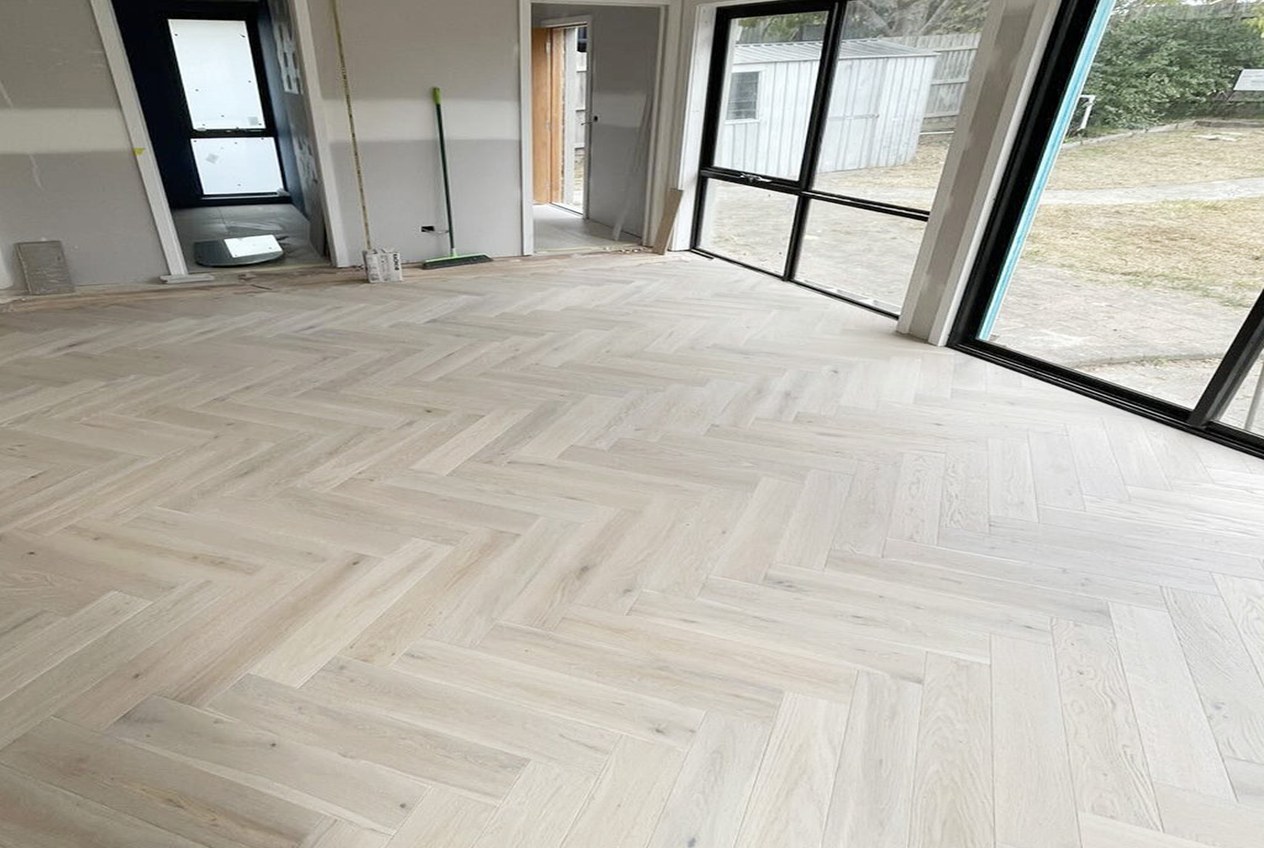
Herringbone and chevron are stunning in the right room and expensive in the wrong one — they waste more material and demand a skilled installer. If you love the look, use it in a defined area such as an entry or a study rather than across the whole house.
Do not skip the subfloor
Every floor is only as good as what sits beneath it. Uneven joists, old adhesive residue, damp concrete and squeaking stair treads all telegraph through the finished surface. Levelling compound, a moisture barrier and proper expansion gaps are not upsells; they are the difference between a floor that stays tight and one that clicks, cups or lifts.
Our rule of thumb
Spend on preparation and installation quality before you spend on the product. A mid-range floor laid perfectly will outlast and out-perform a premium floor laid in a hurry.
Finishes, sheen and the myth of easy clean
Matte finishes hide dust and footprints; satin reflects a little light and is easiest to keep looking clean; high gloss looks spectacular in photographs and shows every mark in real life. For textured surfaces, remember that deeper grain traps more dirt — lovely to touch, more work to maintain.
Ask what the surface needs in a year, not what it looks like on day one. Some oiled floors want periodic re-oiling. Some sealers need specific cleaners. Some stone dislikes common household products. Choose the maintenance routine you will genuinely keep up with.
Living with it: the honest maintenance conversation
Felt pads under furniture, mats at every exterior door, a no-shoes habit and prompt mopping of spills will protect any floor far better than an expensive coating. If you have pets, expect nails to mark softer finishes and plan for it. If you have children, accept that a floor will be a landing pad and pick something forgiving.
Buy a small box of spare planks or tiles and store it. Matching a discontinued product later is far harder than keeping a spare bundle in the garage.
Bringing it together
The most satisfying flooring schemes are not the loudest. They flow from room to room with deliberate transitions, use a consistent palette, and let one material take the spotlight. When the floor, the walls and the joinery agree with each other, the whole house feels considered — and that is a result you notice every day without ever thinking about it.
If you would like help matching material, budget and sequencing across several rooms at once, our flooring team is happy to walk the house with you and put it in writing.